Tracking Microtransaction Purchase Patterns Against Progression Milestone Achievements to Highlight Monetization Impact Zones in Free-to-Play Action Titles
Written by Viktor Günther · Sep 10, 2026
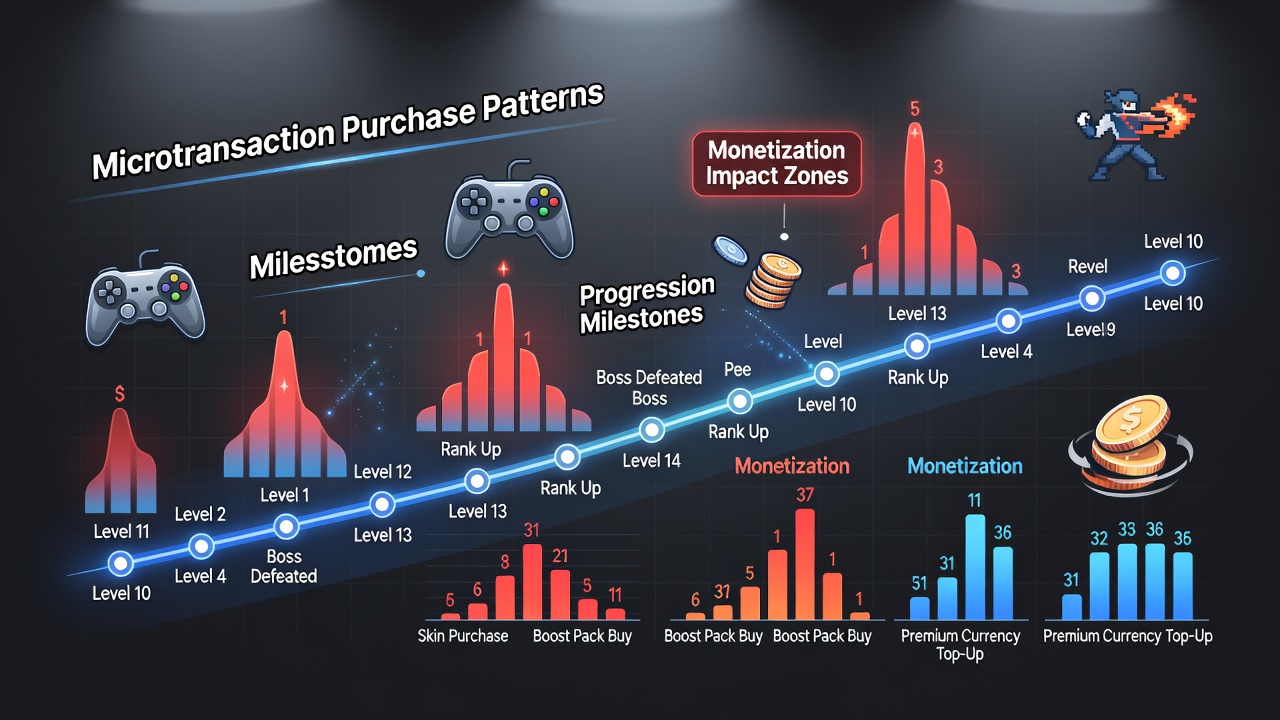
Tracking Microtransaction Purchase Patterns Against Progression Milestone Achievements to Highlight Monetization Impact Zones in Free-to-Play Action Titles
Free-to-play action titles rely on detailed tracking of microtransaction purchases matched against player progression milestones, and this approach identifies concentrated zones where spending spikes occur during key achievement points. Developers collect telemetry on item acquisitions, currency conversions, and battle pass activations while players advance through levels, complete objectives, or unlock new abilities. Research indicates that these patterns emerge consistently across multiple titles, with purchases clustering around moments when players reach gear thresholds or face repeated difficulty spikes.
Data Collection and Alignment Techniques
Analysts aggregate purchase timestamps with in-game event logs to map spending directly onto milestone completions, such as defeating major bosses or reaching ranked tiers. Tools process server-side records that include transaction amounts, item categories, and session durations, then cross-reference them with achievement metadata exported from player accounts. According to reports from the Entertainment Software Association, studios in North America have refined these datasets since 2024 to isolate high-impact periods, and the method now incorporates seasonal updates that reflect shifting player behaviors observed through September 2026.
Teams segment the data by player cohort, separating new entrants from veterans, while noting how progression speed influences purchase timing. Faster players tend to buy convenience items immediately after milestone unlocks, whereas slower cohorts show delayed but repeated spending at the same checkpoints. This segmentation reveals monetization impact zones that developers can target with timed offers or bundle adjustments without altering core gameplay loops.
Identified Impact Zones in Action Titles
Common zones appear at mid-game progression gates where players encounter equipment requirements for continued advancement, and data shows elevated conversion rates for cosmetic upgrades and resource packs during these stretches. Additional clusters form around competitive ladders, where milestone achievements like division promotions trigger visible status rewards that encourage further purchases. Observers note that action-focused mechanics, including fast-paced combat and movement systems, amplify these patterns because players seek immediate power gains to maintain momentum.
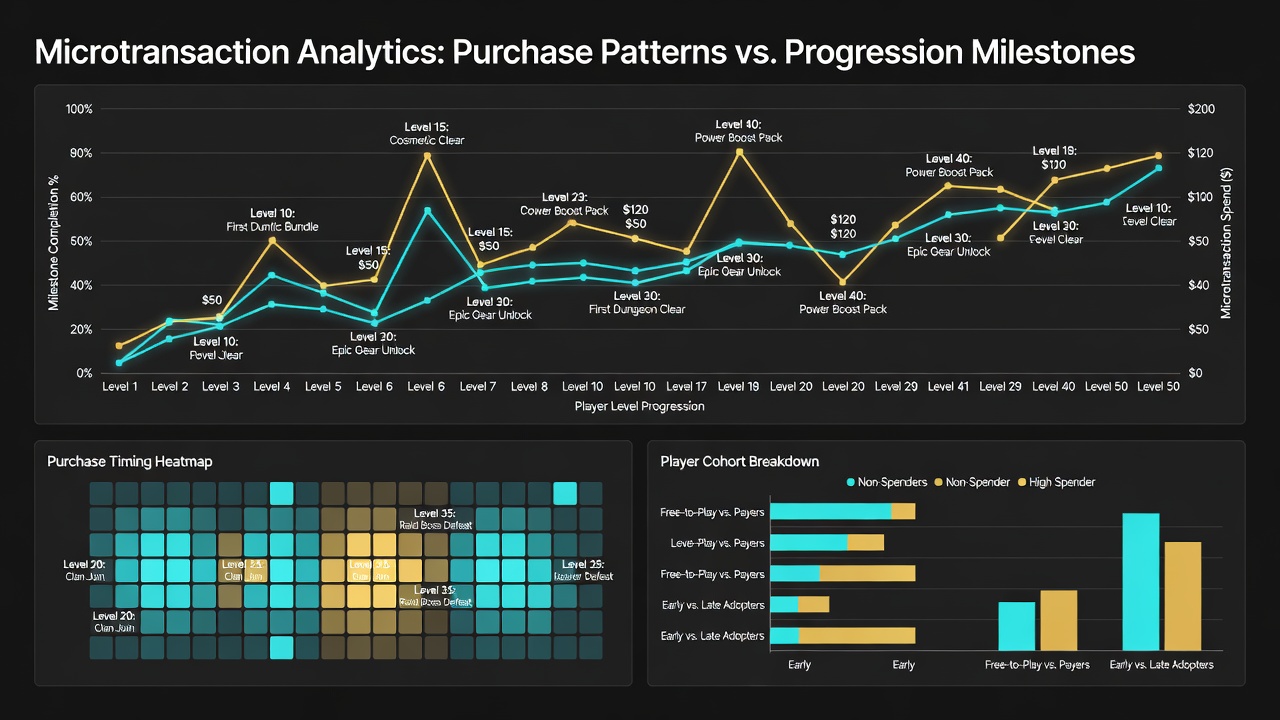
Studies from European research institutions highlight that zones tied to limited-time events overlapping with milestone completions produce the strongest revenue spikes, as players combine progression goals with event participation. These overlaps create natural pressure points where microtransaction uptake rises sharply, particularly for consumables that speed up grind reduction. Figures reveal that titles emphasizing vertical progression, such as those with skill trees or weapon upgrades, demonstrate clearer zone boundaries than horizontal systems focused on side content.
Regional Variations and Industry Benchmarks
Comparative data from Australian market analyses demonstrates that impact zones shift slightly based on regional player preferences, with Asia-Pacific cohorts showing stronger responses at social milestone markers like guild rankings. North American datasets instead emphasize solo achievement thresholds, yet both regions display consistent purchase acceleration at roughly 40 percent and 70 percent completion marks in campaign structures. Industry organizations compile these benchmarks annually, and the resulting models help studios predict revenue windows tied to specific action title features like boss raid schedules or arena resets.
Cross-referencing continues through automated dashboards that flag deviations from established patterns, allowing real-time adjustments to offer placement. One documented case involved a studio adjusting bundle pricing after observing repeated purchases immediately following ability unlocks, and the change aligned future promotions more closely with those exact moments. Such refinements rely on objective telemetry rather than speculation, and they maintain separation between monetization timing and player agency.
Conclusion
Tracking microtransaction patterns against progression milestones provides studios with precise maps of monetization impact zones in free-to-play action titles, and the resulting insights support balanced updates that align commercial goals with existing gameplay structures. Data from multiple regions continues to refine these models through 2026, offering consistent benchmarks for developers who monitor cohort behaviors and event overlaps. The approach remains grounded in aggregated statistics that highlight timing rather than individual player decisions.