Mapping Telemetry Spikes from Beta Test Sessions to Isolate Balance Pivot Points in Evolving Competitive Ladders
Written by Viktor Günther · Nov 19, 2026
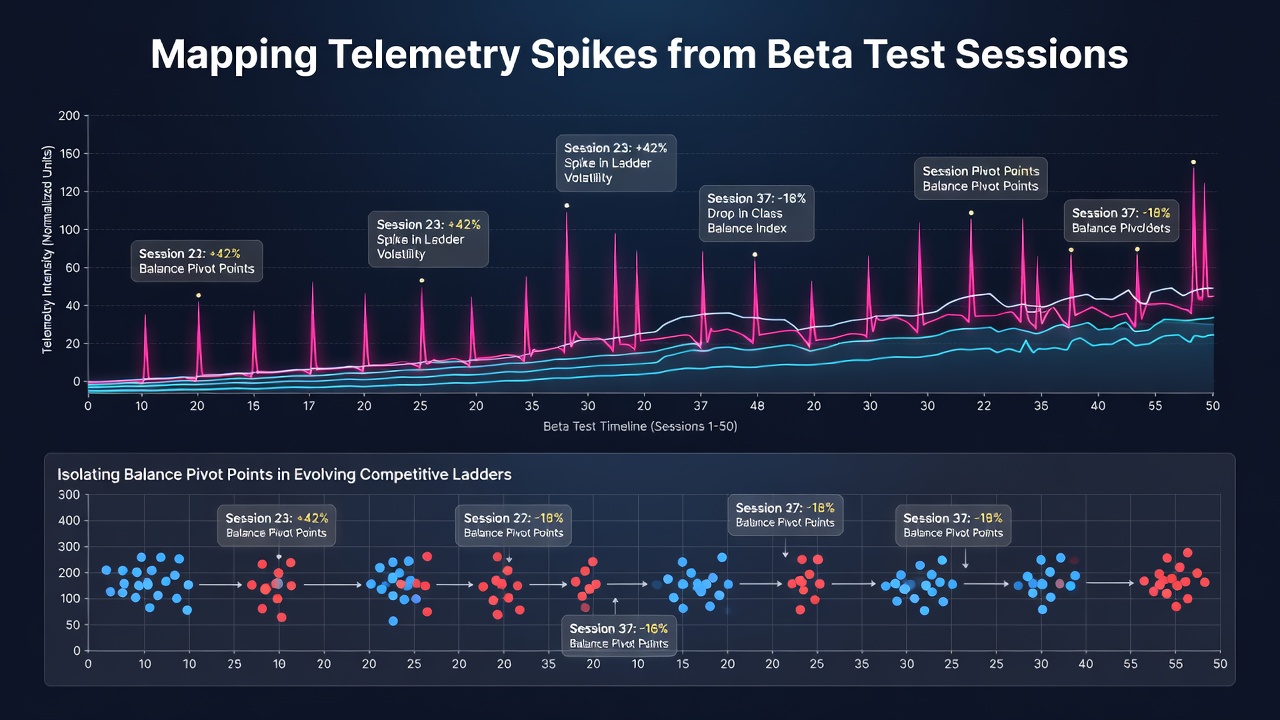
Mapping Telemetry Spikes from Beta Test Sessions to Isolate Balance Pivot Points in Evolving Competitive Ladders
Game development teams collect telemetry data during beta test sessions, and they map spikes in player metrics to pinpoint balance pivot points that shift within competitive ladders as updates roll out over time. These spikes often appear in metrics like win rates, match durations, and ability usage frequencies, which researchers track across thousands of sessions to reveal where adjustments become necessary for ladder stability.
Collecting Telemetry Data in Controlled Beta Environments
Beta tests run in structured environments where participants engage with evolving game systems, while developers log variables such as input patterns, character selections, and outcome distributions. Data aggregation occurs through server-side tools that capture real-time events, and analysts segment this information by skill tiers to observe how ladders respond to new mechanics or patches introduced mid-cycle. In November 2026 several major titles scheduled beta phases ahead of seasonal ladder resets, which allowed teams to gather fresh datasets before full releases.
Observers note that spikes emerge when player behaviors cluster around specific thresholds, for instance when a newly introduced weapon sees usage rates jump from 15 percent to over 60 percent within the first 48 hours of testing. Researchers cross-reference these patterns with match outcome logs, and they isolate pivot points where balance shifts alter progression rates across different ladder ranks.
Identifying Balance Pivot Points Through Spike Analysis
Analysts process telemetry through visualization platforms that highlight anomalies in activity graphs, and they correlate these with ladder movement data to determine which elements drive disproportionate advantages. Studies from institutions like the University of Alberta have examined similar data flows in multiplayer environments, showing how early spikes predict later ladder distortions if left unaddressed. Teams apply statistical filters to separate noise from meaningful signals, while focusing on variables that persist across multiple beta waves.

One documented case involved a team tracking ability cooldown reductions, where telemetry revealed sudden spikes in combo success rates among mid-tier players, and this data guided targeted tweaks before the ladder stabilized. External reports from the Entertainment Software Association indicate that such methods reduce post-launch balance complaints by measurable margins in competitive genres. Developers refine these insights by running follow-up tests with adjusted parameters, which confirms whether pivot points have been isolated accurately.
Applying Insights to Evolving Competitive Ladders
Ladders evolve through ranked seasons that incorporate new content, and telemetry mapping helps maintain equilibrium by flagging elements that accelerate or stall player advancement. Researchers compare pre-patch and post-patch datasets to measure how spikes translate into rank migrations, and they use this information to calibrate matchmaking algorithms. Patterns observed in one beta often inform adjustments in unrelated titles, since core metrics like engagement duration and quit rates follow comparable distributions across genres.
Teams integrate these findings with historical ladder data, which reveals recurring pivot points tied to seasonal events or balance patches. In practice this process involves layering telemetry layers onto existing analytics frameworks, while ensuring that data from diverse player demographics informs the final calibrations. Reports from the Interactive Games and Entertainment Association in Australia have highlighted regional variations in spike patterns, which underscores the value of geographically varied testing pools.
Tools and Methodologies for Spike Isolation
Standard toolkits include heat mapping software and time-series analysis packages that process raw telemetry streams into actionable segments. Analysts apply clustering algorithms to group similar spike events, and they validate findings through controlled A/B tests within subsequent beta iterations. This approach connects isolated data points into broader narratives about ladder health, although it requires careful calibration to avoid overgeneralization from limited sample sizes.
Documentation from beta sessions frequently includes session replays that supplement numerical data, and developers review these alongside spike visualizations to understand contextual triggers. The methodology scales from small indie projects to large studio operations, since the underlying principles of metric correlation remain consistent regardless of production scale.
Conclusion
Telemetry spike mapping from beta sessions provides a structured pathway for isolating balance pivot points in competitive ladders, and ongoing refinements in data collection continue to support more precise interventions. As game systems grow in complexity, teams rely on these techniques to sustain fair progression across evolving rank structures, with data from periods like November 2026 contributing to cumulative industry knowledge on effective balance practices.